SOSIO-RELIGIOUS ASPECTS OF THE SASAK COMMUNITY IN READING A PUSPAKARMA MANUSCRIPT: COMMUNITY DEVELOP
2024-07-11
The United Nations, 1995: "a process where community members come together to take collective action and generate solutions to common problems” How is it done?
IACD, 2014, 8: “ … organisation, education and empowerment of people within their communities, whether these be of locality, identity or interest, ….” Empowement-> power grant, participatory work…
PM: (1) communities (not necessarily societies); (2) Empower (not one way, participatory; (3) common challenges (natural or imagined)
Suits Indonesian way of philanthropy, collective societies. Cek tafsir: As-Syura :38, Ali Imran :159
What’s participatory in Community Development?
( We need evidence-> research)
(1) The sociopolitical context of community; (2.1) inclusive citizenship and (2.2) how these may inform community practice; (3) Strategies for promoting social change.
Trough analysis of Puspakarma manuscript, coded Gallery-50B Ciputat, this presentation would like to contribute so.
Baried (1994), Fathurrahman (2015) and Hirst and Manier (2015): manuscript contains past information that shows the thoughts, feelings, beliefs, customs, and values that prevailed in the past society->learning a communal identity
In Psychology, learning is generally defined as relatively changes in behavior, skills, knowledge, or attitudes resulting from identifiable psychological or social experiences.
Here is how we learn from our manuscript:
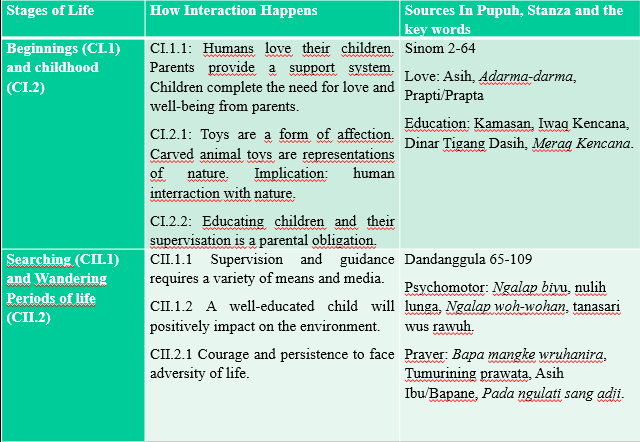
Human relations with their ancestors
Sinom, stanza 47: Sadness penetrated his heart/men and women cried/felt his emptiness / Nothing was told by the king / because he was too fond of his son / Now the King Putra's condition is told / after a few days in the sky / King Putra then said / ‘Eh, I can't live in the sky!’
(Kalalar kebeking raga/ wir minangsi jalu istri/ malah belek anganira/ nengakna sri bupati/ lintang kangen ing siwi/ Raja putra kang kawuwus/ pirang dina aneng tawang/ raja putra angling aris/ “Eh kola tanana ing ngwang.’)
Human relations with their ancestors
Sinom, stanza 47: Sadness penetrated his heart/men and women cried/felt his emptiness / Nothing was told by the king / because he was too fond of his son / Now the King Putra's condition is told / after a few days in the sky / King Putra then said / ‘Eh, I can't live in the sky!’
(Kalalar kebeking raga/ wir minangsi jalu istri/ malah belek anganira/ nengakna sri bupati/ lintang kangen ing siwi/ Raja putra kang kawuwus/ pirang dina aneng tawang/ raja putra angling aris/ “Eh kola tanana ing ngwang.’)
Human relations with nature
Puspakarma (Durma, stanza 134):
Like the Mayura lake / how big / who has this lake / then King Putra / walked again / facing the person on the mountain / he saw / he smelled the fragrance of flowers.
(Luwir telaga mayura kayang ngapa agung neka/ kang ngadwe uuh neki/ ya ta Raja Putra/ amlih sira lumampah/ amedek dasang ring ngukir/ cingak punika/ gongas gandaning jalmi.)

Evidence based research: WFH (Coop with BPS, 2021)
Our institutions of learning-schools, social institutions-> not just to acquire knowledge but seek, understand and promote social wisdom, local resources and distribute that digitally.
Internet divide- synchronous & asynchronous.

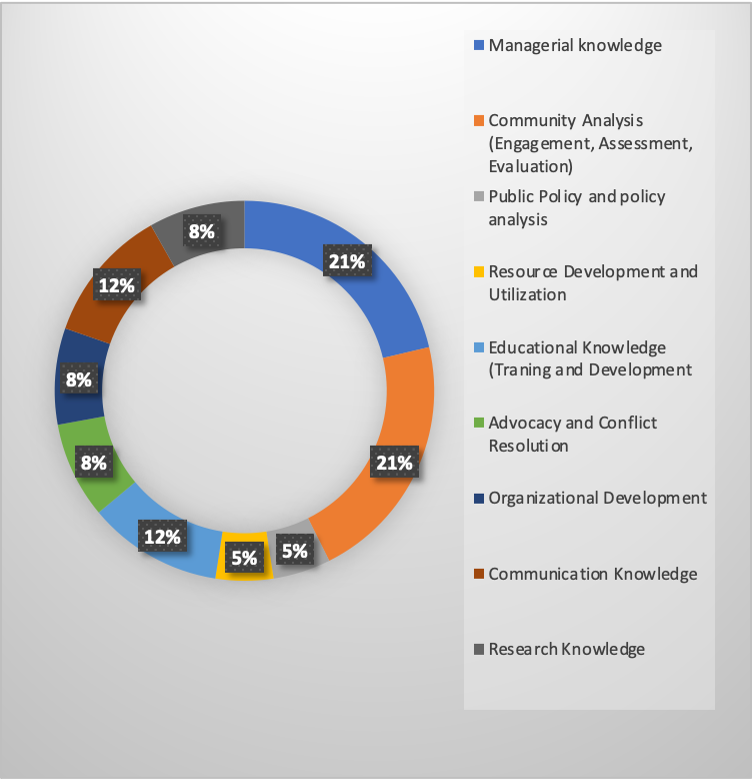
Evidence based research: PMI UIN Mataram project
- Meta analysis: synthesis of analyses
- Key word: Community development, education, practice, competence.
- 170 academic sources identified, e.g. Classical Rothman’s.
Conclusion, Puspakarma:
The core competence of community work practitioners; hence is ability to demonstrate to:
- Assess: need analysis and resources then engage;
- Analyze, list resources and plan;
- Communicate: promote: through appropriate media and enable trough training and database info to (refer);
- Work collectively and develop professional learning.
Conclusion, global:
The modern lives of communities are “multiplex" including digital life.
Community development grows out of particular dimensions of social wisdom and involvement (Cnaan & Milofsky, 2007, pp. 1-17).
Hence, research and competence for community work practitioners (Freire, 1993; Rothman, 1995; Weil and Gamble, 1995), in whatever setting, could be defined in:
Knowledge: Get updated with relevant literature and research about local resources, beneficiaries and problems;
Skills: Demonstrate responses and actions with their reasons ;
Value: Get aware of and be sensitive to ethical issues from the community work.
Keterangan: Pembahasan ini disampaikan pada kegiatan dialog museum tanggal 11 Juli 2024