Two Islands, One Thread. The art and cultures of Lombok and Bali
2026-03-12
Between 15 May and 11 October 2026 the Art Gallery of South Australia will present the display Two Islands, One Thread: The art and cultures of Lombok and Bali in the lower Melrose Wing, a display that explores the remarkable and unique story of the artistic exchanges that occurred between two very different Indonesian societies - Hindu Bali and Muslim Lombok over the millennium.
The islands of Bali and Lombok are famous as tourist destinations for Australians, but few people are aware of their rich artistic and cultural traditions, which developed over a thousand years through close cultural links across the waters of the Lombok Straits. The exhibition highlights the diversity of art, including the woven, embroidered, painted and tie-dyed textiles, created by the Sasak people of Lombok and the Balinese as an expression of their spiritual beliefs, community values and reverence for their ancestors. The display will feature previously unseen works of art from the AGSA collection, including those donated by Michael Abbott AO KC, as well as loans from the West Nusa Tenggara State Museum in Lombok.
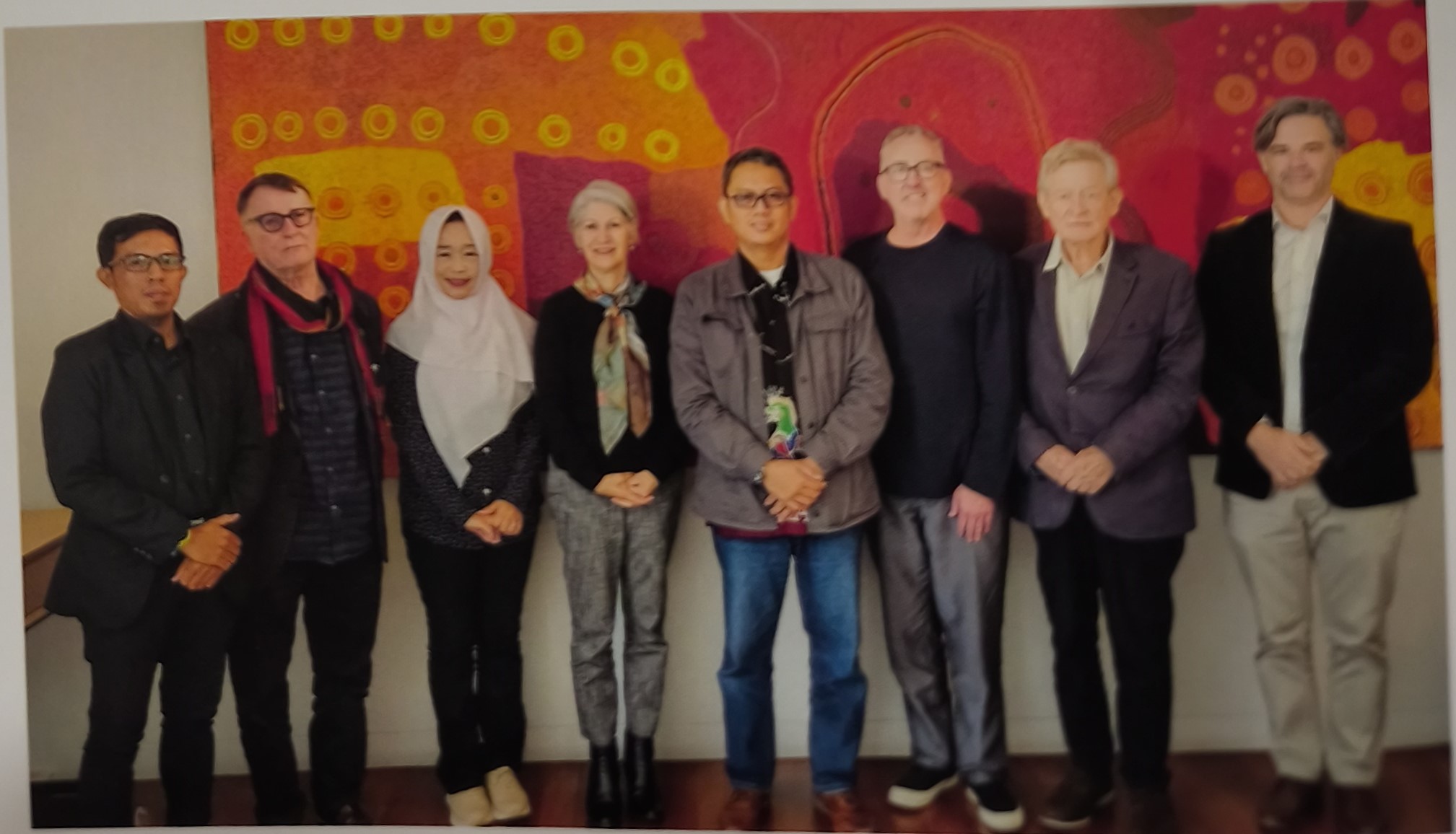
On 18 September 2025, the Art Gallery welcomed a delegation from the Museum Negeri Nusa Tenggara Barat (NTB) to discuss a proposed loan of six works of art from the collection of the museum for the exhibition Two Islands. The delegation included Ahmad Nur Alam, Director; Dra. Gunarti, Education; and Fikri Adityawarman, Marketing. The delegation was organised by Dr James Bennett, former Curator of Asian Art at AGSA (2003-21) and currently Adjunct Curator, West Nusa Tenggara State Museum and Emeritus Curator of Southeast Asian Art and Material Culture, Museum and Art Gallery of the Northern Territory. The visit was facilitated by the Gallery's former Chair of the Board and significant donor Michael Abbott AO KC, whose donations over many years are featured in the exhibition and accompanying publication.

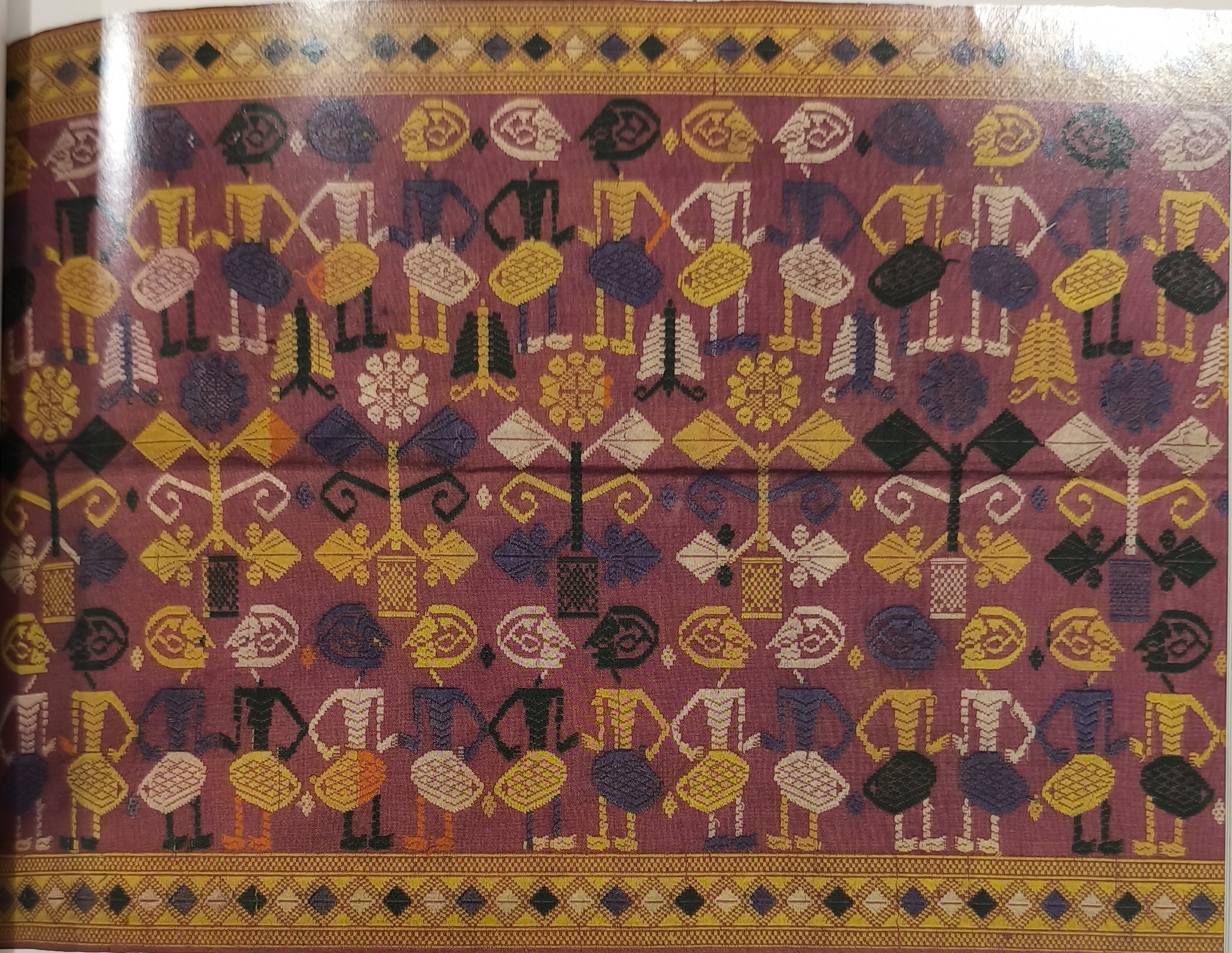
detail: Indonesia, Waist-wrap cloth (leang, kampuh) with shadow pupper figure of Jayengrana, 1950-75, Central Lombok, cotton with dyes, songket weave, 54.0 x 142.0 cm; Gift of Michael and Mary Abbott through the Art Gallery of South Australia Foundation 1986. Donated through the Australian Government's Cultural Gifts Program
According to Nuralam, the Director of West Nusa Tenggara State Museum, museums are not only places to store artefacts from the past but also living spaces that are relevant to the social and cultural life of today's society. Built in the early 1980s, the museum houses more than 7,000 items, ranging from art and talismans, to fossils and weapons. The works of art on loan to AGSA will be a highlight in the upcoming display, forging an invaluable cultural bridge between Indonesia and Australia.
The display will be complemented by a book, Two islands, one thread: Lombok and Bali textiles from the Michael Abbott Collections, co-edited by Dr James Bennett and I Made Rai Artha, with Michael Abbott AO KC, and will be published in June 2026. The publication is one of the first to explore the art and culture of Lombok, as well as to celebrate the philanthropy of Michael Abbott and Sue Crafter. As Michael stated:
I began collecting what I believed were Balinese textiles, only to realise many were made in or traded to Lombok during the days of the Karangasem Kingdom (c.1675 to 1894). With this book, I hope Lombok will be recognised for its equally important contribution to the textile heritage of both islands.
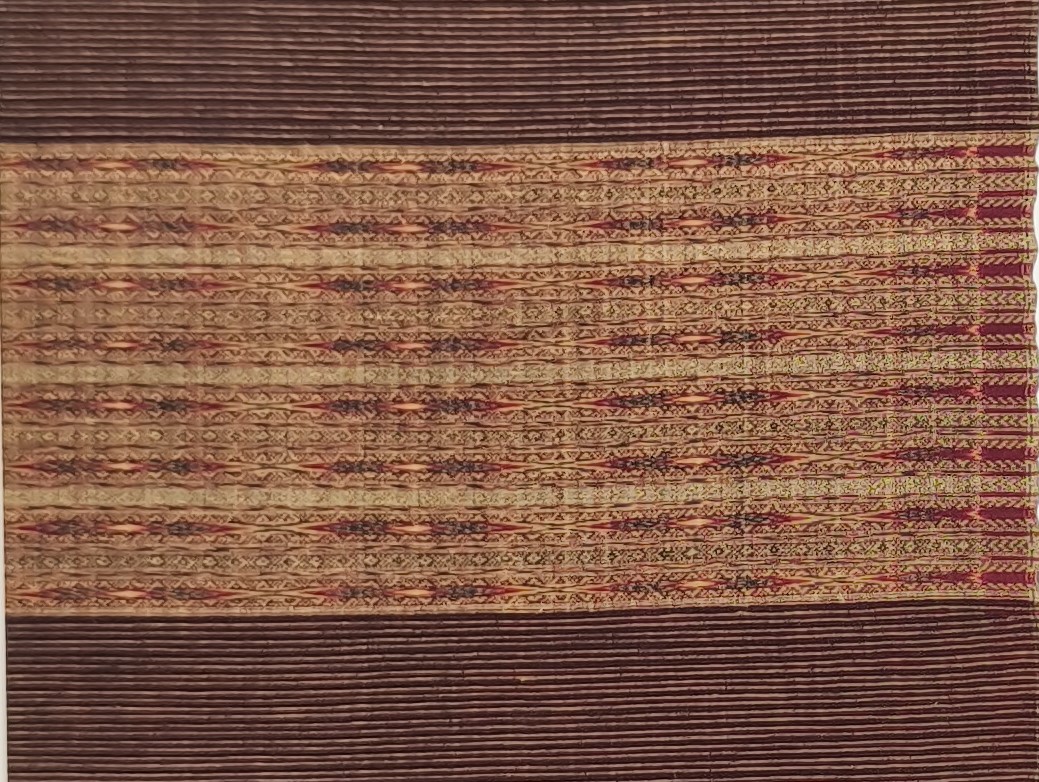
detail: Indonesia, Royal heirloom cloth (kain sembiran), c.1880 or earlier, Lombok, found in Prailiu, East Sumba, Nusa Tenggara Timur, handspun cotton with natural dye, gold paper-wrapped thread, weft ikat, supplementary weft, and plain weave, 108.0 × 210.0 cm; Gift of Alastair Hunter OAM through the Art Gallery of South Australia Foundation 2020 in recognition of the dedication and scholarship of James Bennett, Curator of Asian Art (2003-21) in building, presenting and promoting the Gallery's Asian Art collection. Donated through the Australian Government's Cultural Gifts Program
Many Gallery patrons are familiar with AGSA's exceptional of those created in the unique culture of its near-neighbour Lombok, which today is a part of the West Nusa Tenggara province, basically the western Lesser Sunda Islands. The complex history of Lombok is reflected in its art, in which belief and artistic creativity intersect and are an expression of the Sasak people.
As the old Sasak saying goes, Gunung Rinjani dan Gunung Agung saling melihat (Mount Rinjani and Mount Agung gaze at each other), meaning that the histories of Bali and Lombok are intimately entwined in ways the Lombok Strait cannot divide. Centuries of maritime contact, migration, trade and an alliance between Bali and Lombok facilitated the exchange of people, culture and artistic techniques, although each island retained its particular practices. The material culture of both islands. while expressions of distinct beliefs, speak to the importance of textiles in mediating the relationships with both the seen and unseen worlds.
The island of Lombok is a place where textiles are deeply woven into social life. Its renowned ikat traditions highlight the imaginative practice of tying and dyeing threads before weaving, often with motifs conveying local values and customs that stretch back for countless generations. Songket is a characteristic brocade, woven with metallic threads that shimmer against the colourful background. Other handspun textiles include umbaq and osap, these featuring simple geometric and figural patterns for both ritual and everyday use.
In old Javanese, 'Bali' translates to 'sacred offering, an apt reflection of the island's ceremonial textiles, many of which are created for spiritual protection and to maintain cosmic balance. Ikat is also central here: gringsing uses tie-dyed warp and weft threads, while cepuk is produced with weft-ikat techniques. The intricate patterns, sometimes also geometric, form a captivating visual world, one that honours the divine power.
Artikel ini dikutip dari: Agsa Magazine No 60 (March - June 2026)